
History of Uzbekistan
Over 2 700 years of unbroken civilisation — from the Achaemenid Empire to the modern republic. Every city is a chapter of the great Silk Road.
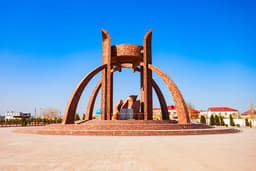
Achaemenid Empire
The territories of modern Uzbekistan were part of the Persian Achaemenid Empire. The cities of Maracanda (Samarkand) and Bactra were already major trade centres on the ancient routes.
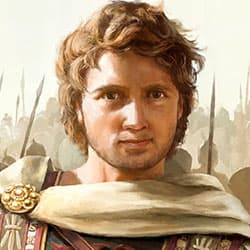
Conquest by Alexander
Alexander the Great conquered Sogdiana and Bactria. He founded Alexandria Eschate (modern Khujand) and married the local princess Roxana. The region became a crossroads of Greek and Eastern cultures.
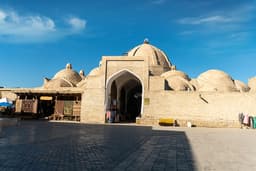
Greco-Bactrian Kingdom
After Alexander's death, the Seleucid governors established the Greco-Bactrian Kingdom — a unique fusion of Hellenistic and Iranian civilisations. The Silk Road began to take shape.
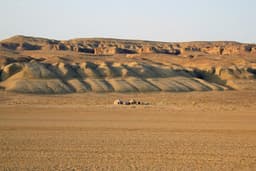
Kushan Empire
The Kushan Empire connected China, India and the Mediterranean. Buddhism, Zoroastrianism and Hinduism coexisted on this land. Termez became a great Buddhist centre.
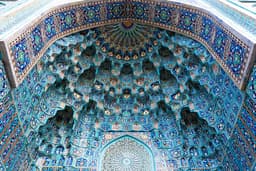
Arab Conquest
Arab armies brought Islam to Central Asia. The cities of Bukhara and Samarkand became major Islamic scholarly centres. A new era of culture, science and architecture began.
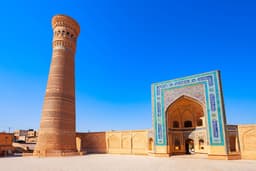
Samanid Dynasty
The Samanid state became the cradle of Persian-Tajik literature and science. Ibn Sina (Avicenna) and al-Biruni were born in this era. Bukhara — the cultural capital of the Islamic East.
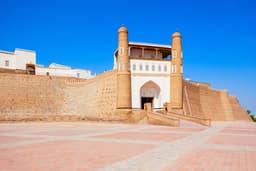
Mongol Invasion
Genghis Khan's hordes devastated the cities of Central Asia. Samarkand, Bukhara and Urgench were largely destroyed. But the region recovered and flourished again.
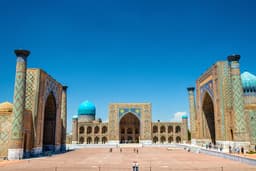
Empire of Timur
Timur (Tamerlane) created a vast empire with his capital in Samarkand. He transformed it into the most beautiful city of the era — the Registan, Gur-e-Amir, Bibi-Khanym Mosque were built. His grandson Ulugh Beg was a great astronomer.
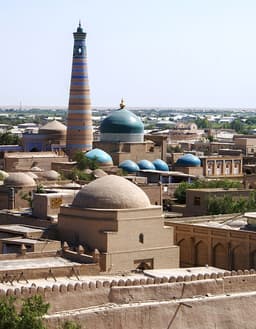
Khanates of Central Asia
After the fall of the Timurids, the Bukhara, Khiva and Kokand Khanates emerged. Rivalry and trade flourished on the Silk Road. Khiva's Ichan-Qala was built in its current form.
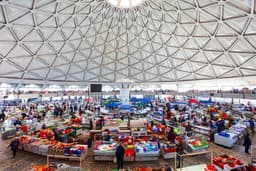
Russian Conquest
From the 1860s Russian forces conquered the khanates. Tashkent became the capital of Russian Turkestan. Railways, schools and European urban planning appeared alongside traditional life.

Uzbek Soviet Republic
The Uzbek SSR was proclaimed in 1924. Collectivisation, industrialisation, the cotton monoculture and the Aral Sea ecological disaster shaped the Soviet decades. Education and literacy grew rapidly.
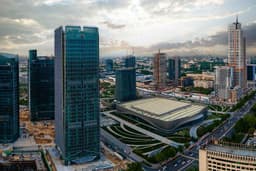
Republic of Uzbekistan
Uzbekistan declared independence on 31 August 1991. Since 2016 major reforms have opened the country to the world. Tourism, investment and cultural heritage have become national priorities.
Historical tours of Uzbekistan
Walk the streets where Timur and Avicenna walked. Our guides bring history to life.
View tours