
Muynak
A former fishing port turned to desert in half a century. The most powerful image of the 20th-century ecological disaster — and one of the most unusual places on the planet.
The face of Muynak
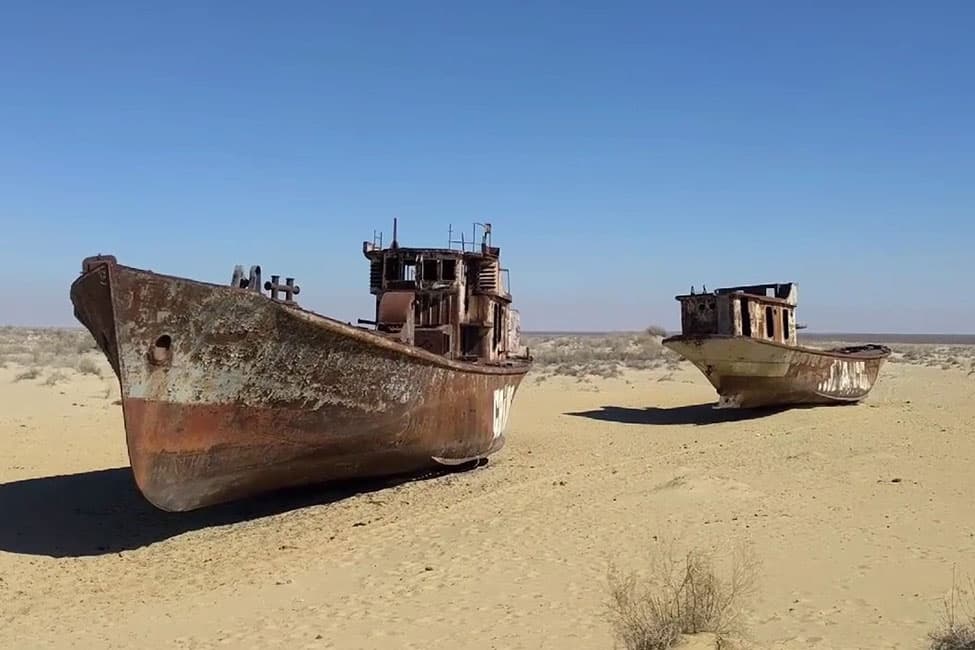
A port turned to desert
Half a century ago Muynak was a port — fishing boats left from here, thousands worked at the canning factory, zander and carp were caught. Today the sea lies 200 km away across desert, and the port has become an open-air museum where twelve rusting ships stand on the former seabed.
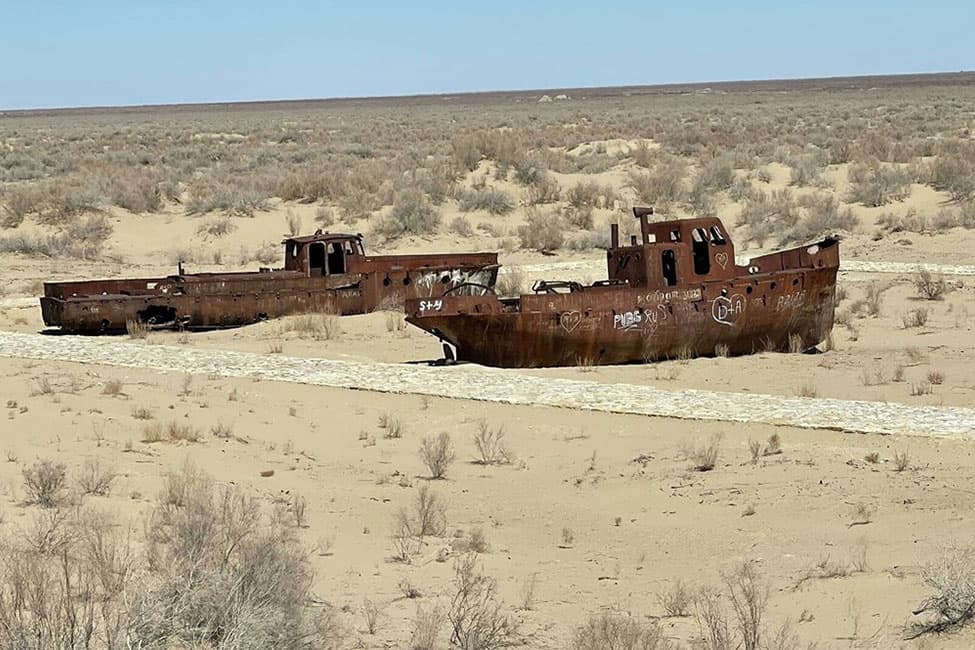
A 20th-century disaster
The Aral Sea dried up because Soviet planners diverted the Amu Darya and Syr Darya rivers to irrigate cotton. Over thirty years the level dropped 23 metres and the sea split into several lakes. It is the 20th century's largest man-made ecological disaster.

Across the Ustyurt plateau
Today Muynak draws those who want to see planetary-scale human impact. Jeep routes lead from town to the Ustyurt plateau with its 200-metre cliffs, to open-air glamping camps and to the remnants of the Greater Aral.
Getting to Muynak
What to see in Muynak
Continue the journey
Time to see Muynak for yourself
Leave a request — we'll build a route including this city.